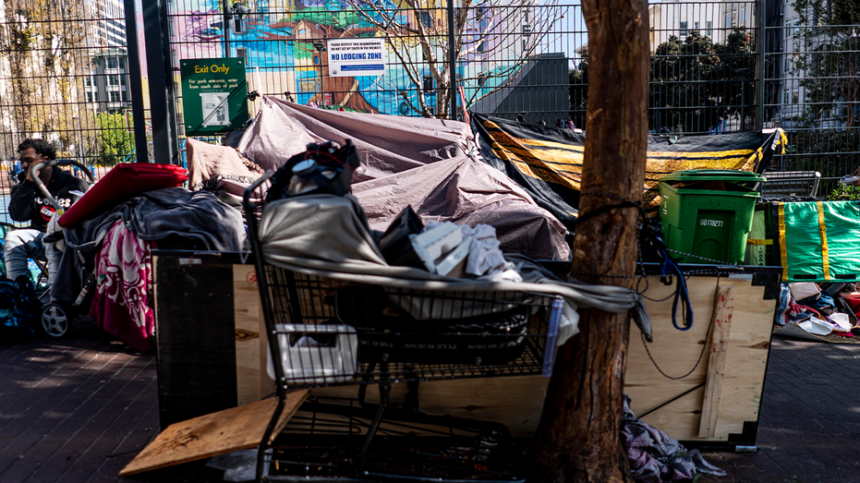
In one of the wealthiest places on Earth, thousands are living in tent cities on the streets of Los Angeles, an “” that even former Democrat President Barack Obama recently acknowledged on a podcast. He slammed the moral failure of allowing people to languish without real help while noting that encampments downtown are a “losing political strategy.” He demanded policies that “recognize their full humanity” and provide genuine resources for success.
But this is not simply a moral failure, it is a structural one.
Though Obama didnt name Democrat Gov. directly, the critique lands squarely on his doorstep â after all, Newsom has been at the helm as Californias homelessness ballooned to record highs, even after more than $24 billion was funneled into solving the problem since 2019. Newsoms team claims agreement with Obama, touting mental health reforms and encampment cleanups, but the reality on the ground tells a different story.
As a California native who has spent years working directly on the streets helping move homeless veterans into treatment and off encampments, Ive seen firsthand that this crisis is not simply about housing, its about untreated trauma, addiction and lack of structured support.
Newsom is crowing about a minor drop in unsheltered homelessness for 2025, calling it the largest decline in 15 years. And while its a very small step in the right direction, lets not break out the champagne. This “progress” comes after record-breaking homelessness under Newsoms watch, despite historic levels of spending that created an entire ecosystem built to manage the crisis rather than resolve it. This isnt a victory lap; this is pre-campaign damage control for a system that has grown financially dependent on the existence of the problem.
As I detail in my book, “The Race to Save California,” the heart of the homelessness issue isnt a lack of funding or awareness. After all, with $24 billion spent and almost every sidewalk occupied, California has both in spades and is still a disaster. The problem is not scarcity, it is misaligned incentives created by how the money is used and deployed.
Politicians like Newsom obsess over housing shortages because thats a simpler and more straightforward fix that makes for easy soundbites to virtue signal accomplishment, even if they dont really fix anything. Housing became the preferred “solution” not because it worked, but because it justified enormous spending pipelines.
Because why deal with the important, messy stuff â like , mental health treatment, life skills training and social reintegration â when they could channel billions into construction-heavy programs that sustain funding flows long after ribbon cuttings?
This mindset mirrors the , which turned homelessness into a housing initiative, and with it, a vehicle for sustained government spending.
That approach is now beginning to shift. Under President , HUD Secretary Scott Turner has recognized that homelessness cannot be treated as a housing issue alone. The crisis isnt simply about shelter, its about stability. You cant build your way out of a fentanyl addiction, untreated schizophrenia, or PTSD. Many need treatment, structure and accountability, not handouts and disingenuous compassion that feeds the cycle.
The is a prime example of whats really needed. There are over 35,000 homeless veterans nationwide on any given night. Its a travesty: heroes who once led under fire now sleep in tents because bureaucracy and profits trump substantive solutions.
These vets dont need pity and handouts. They need purpose â leadership opportunities, job training, treatment and a place in a community that both supports and depends on each other. Instead, veterans are warehoused in misery, their potential wasted and the crisis dragging on while politicians brag about the number