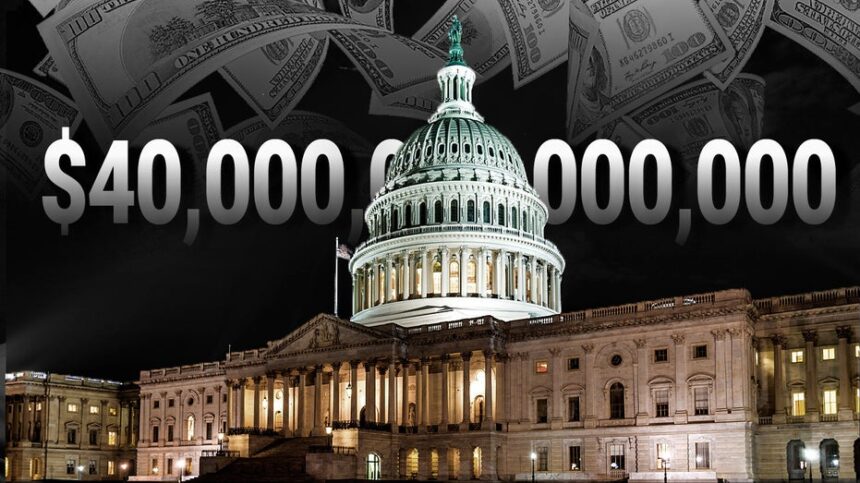
Americas national debt is climbing higher with few solutions in sight. outstanding exceeded $40 trillion for the first time in history â that’s nearly $300,000 per household. This figure should alarm every American, yet years of political promises of easy fixes have dulled the publics sense of urgency.
As America races past the grim, $40-trillion milestone, it is essential to confront why such a high debt is an existential threat to our republic and what realistic solutions remain.
The most common benchmark is the debt-to-GDP ratio. Total U.S. public debt now exceeds 124% of GDP. Only a handful of countries rank worse â among them Sudan, Venezuela, and stagnant developed economies like Japan, Greece and Italy.
$50 TRILLION IN DEBT IS NOT A DISTANT THREAT. AMERICA IS SPEEDING TOWARDS IT
No country should aspire to rank among the highest in this metric, yet America does.
Even debt held by the public, over $32 trillion, stands near 100% of GDP. And according to the Congressional Budget Office, it’s projected to reach 120% by 2036.
TRUMP INTERVENES AS HOUSE GOP REVOLT PUTS SAVE AMERICA ACT AT CENTER OF SPENDING SHOWDOWN
A rising debt-to-GDP ratio signals Americas eroding capacity to service existing obligations without heavy reliance on borrowing. Overwhelming national debt slows economic growth, puts upward pressure on inflation and interest rates, reduces investor confidence, diminishes the American dollars standing as the global currency and may even spur a fiscal crisis.
These aren’t just theoretical risks â exorbitant debt produces concrete economic damage. One outcome is the crowding-out effect. Heres how it works:
The government borrows to pay back debt obligations. It does so by selling bonds to finance deficits. This reduces the supply of available funds in the market. The result is upward pressure on interest rates and less capital for private investment. This makes it more difficult for businesses to borrow and invest in job creation, innovation and expansion or for individuals to take out loans.
In short, more debt means less free-flowing money in the economy.
The Congressional Budget Office estimates that for every dollar the deficit increases, private investment falls by 33 cents. Still more, an additional $1 trillion in debt reduces long-run U.S. capital stock of productive assets by 0.7-0.8%. More government debt means less private capital formation, slower productivity growth, and, ultimately, less money in the pockets of Americans.
These effects are quiet but damaging. Unlike sudden shocks to the economy â trade disruptions, technological developments or global conflicts â the debt compounds over time. Its a handy tool for politicians to paper over todays problems with massive amounts of spending while shifting the burden to future generations.
JOHN ADAMS MADE A TERRIFYING PREDICTION. AMERICA IS CLOSE TO PROVING HIM CORRECT
Some poli