The first week of Tupac Shakurs long-awaited murder trial exposed the challenge prosecutors face nearly 30 years after his death â most of the key players are dead, others refuse to cooperate and their case rests heavily on the defendant’s own words.
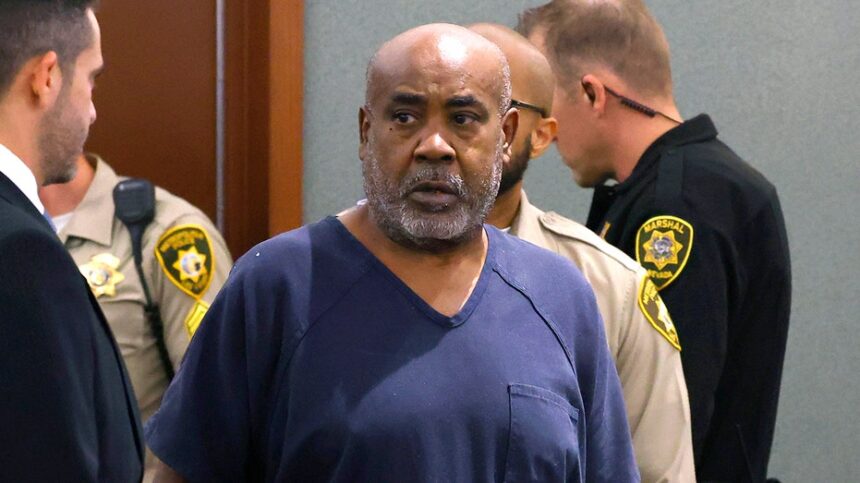
Duane “Keffe D” Davis, 63, is accused of providing the murder weapon used in a 1996 Las Vegas drive-by shooting that killed Shakur and wounded Death Row Records founder Marion “Suge” Knight. He is not accused of pulling the trigger. The trial began Monday and is expected to run four to five weeks.
Three other men believed to have been in the suspect vehicle with Davis are all dead, including Davis’ nephew, Orlando “Baby Lane” Anderson, who was jumped earlier that night by Knight’s entourage, according to prosecutors.
The defense denies he was involved, and his attorney, Michael Sanft, has suggested that he fabricated the version of events now being used by the prosecution.
Former FBI Special Agent Wade Lee testified that Davis sat down with investigators in 1998 after a drug-trafficking bust and began cooperating with authorities.
Davis sat down for multiple interviews with investigators, then spoke out on a BET documentary and detailed the night of the slaying in his memoir, prosecutors said.
Davis is a former leader of the South Side Compton Crips, which was a rival of the Mob Piru Bloods, a gang affiliated with Knight, who is serving a 28-year prison sentence for another Compton dispute that turned deadly.
DIDDY SENT TO SOLITARY CONFINEMENT AFTER PRISON FIGHT WITH ANOTHER INMATE: MULTIPLE REPORTS
The two groups had a bloody rivalry, highlighted by a brawl in the summer of 1996 that preceded Anderson’s beating at the MGM Grand casino on Sept. 7, 1996, shortly before Shakur was gunned down in what prosecutors allege was retaliation.
Knight, who is on the witness list, has said in prior interviews he does not intend to cooperate with prosecutors. James “Mob James” McDonald, a former Mob Piru associate, told the court to “treat me as a hostile witness” when he took the stand and later told Davis directly, “I don’t want to send you to prison.”
“At the time, again, the gang culture, they had that same culture as the La Cosa Nostra, which was, you know, we dont talk to the cops,” said Chris Swecker, a former assistant director of the FBI.
He also has a background in gang investigations and helped implement the National Gang Intelligence Center.
“You would think a victim would say, Hey, thats who shot me. Not the case in that culture,” Swecker added. “And so thats partly why ⦠nobody was charged originally with the crime.”
Davis’ own words are now central to the state’s case against him.
“The need to brag and the need to get street cred sort of overrode caution,” Swecker said. “And now he sits in that defendants chair.”
Prosecutors opened Monday by describing Shakur’s killing as revenge for the beating of Anderson, Davis’ nephew, inside the MGM Grand after a Mike Tyson fight on Sept. 7, 1996. They argue Davis obtained a gun, helped hunt down Shakur and handed the weapon into the back seat before someone opened fire.
<a href="https://foxnews.com/us/tupac-shakur