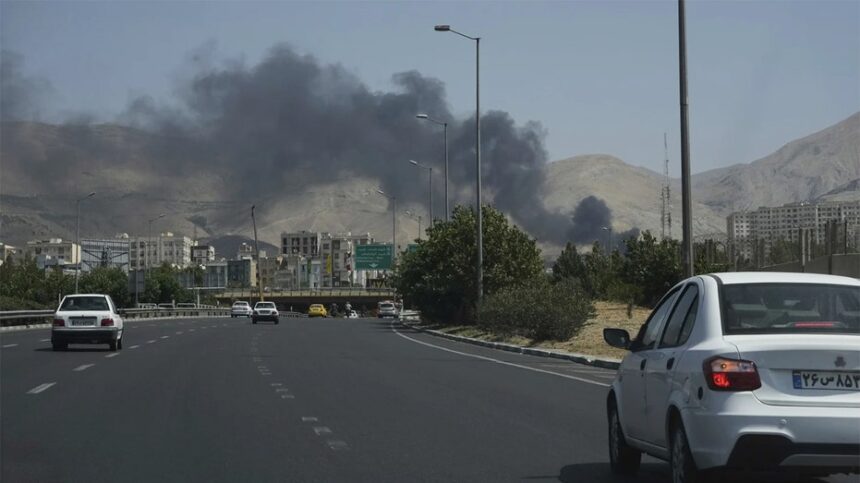
Irans tyrannical and ruthless regime is disintegrating. After yet again massacring thousands of its own citizens for voicing their dreams for liberty and better governance, the meantime resumed pursuing nuclear capability and its aggressive ICBM program. The regimes overconfidence in U.S. inaction cost it its leader and its core military capabilities are going up in smoke. Against this backdrop, the conflict has spread to the Gulf, threatening the Strait of Hormuz, a chokepoint for roughly one-fifth of the worlds petroleum, and forcing the rest of the world to rethink how it prices energy risk and political alignment.
This is not another regional flare-up. This is a rupture of an old equilibrium in which sanctioned oil, shadow fleets and calibrated escalation kept markets stable enough to function. That equilibrium is now breaking. A rapid political-military shift in the Middle East is unfolding alongside a restructuring of the global energy order.
When I was in Afghanistan during the surge, Tehrans active support for the insurgency fighting the United States and Afghan forces fomented instability and amplified violence for which civilians paid the biggest price, a dynamic that so many across several nations have tragically encountered for decades. But Iran was never a contained regional problem.
While its terrorism was widely perceived as a Middle East issue, its cyber and intelligence operations spanned continents, with assassination plots that included the American president. As to global effects, Irans energy has always made its regime globally significant.
At this stage of the conflict, the most economically significant and immediate geography is the Strait of Hormuz which Iran is working to choke off. Roughly one-fifth of global petroleum and a substantial portion of liquefied natural gas move through that narrow corridor. As strikes intensified, , insurers reassessed exposure and operators rerouted cargoes. Markets adjusted immediately. Energy security and geopolitical stability are now inseparable; maritime risk has become the pressure valve through which regional conflict spills into global consequence.Â
This realignment did not begin in the Gulf this weekend. It started with U.S. actions in Venezuela. Caracas holds the â about 303 billion barrels â and even marginal normalization under a more U.S.-cooperative government alters the supply calculus for Washington and its allies.
The new U.S.âVenezuela arrangement has already generated roughly $2 billion in transactions in just weeks, pulling Venezuelan barrels back into wider circulation and altering the discount ecosystem Moscow had grown accustomed to. Stack that with a post-crisis Iran re-entering markets on different terms, and the shadow ecosystem of discounted, sanctioned crude â Russia, Iran, Venezuela â begins to fracture and reprice simultaneously.
But the most consequential energy recalibration runs through Beijing. China is essentially Irans oil export market. In 2025, China bought more than 80% of Irans shipped oil, averaging ~1.38 million barrels per day, about 13.4% of Chinas seaborne crude importsâmeaning Beijing is simultaneously Tehrans economic lifeline and its strategic choke chain.
By turning a sanctioned producer into a quasi-captive supply relationship â sustained through gray-market routing, reflagging and intermediary hubs â discounted barrels in normal times and leverage in crisis. Any sustained disruption of Iranian flows forces China into replacement buying that tightens global markets and exposes Chinas own energy security; Iran exports about 1.6 million bpd mainly to China and such disruptions pushes Beijing to pivot to alternatives.
The relationship is therefore best understood as a dependency loop: Iran needs China for revenue and sanctions relief-by-proxy; China uses Iran as a discount supplier and as a pressure valve in the sanctioned crude system â one that can be tightened or