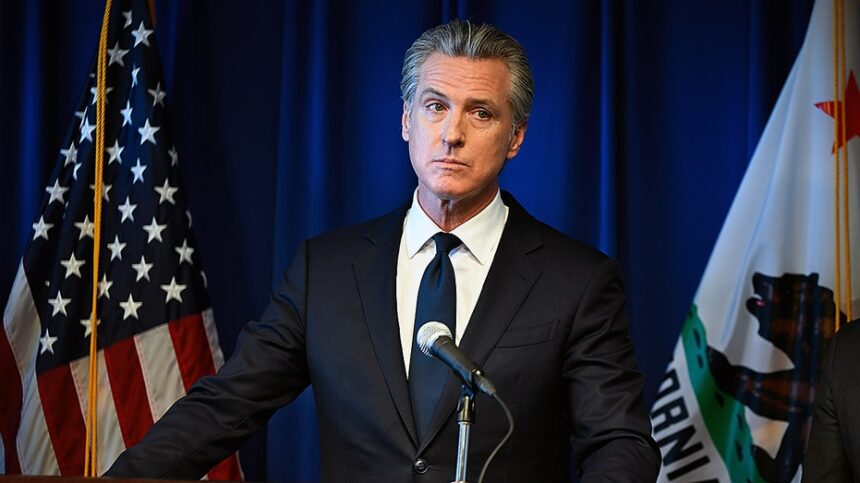
California Gov. announced plans to sue the Trump administration over its push to restrict after the Supreme Court allowed the administration to enforce challenged provisions of President Donald Trumps executive order for “election integrity” while litigation continues.
The announcement sets up the next phase of the legal fight after the Supreme Court (SCOTUS) ruled 6-3 in favor of the Monday, lifting an injunction that had blocked the order in 23 states ahead of November’s midterm elections.
stressed that its decision addressed the injunction rather than the ultimate legality of the order, leaving the door open to additional challenges.
Newsom criticized in a statement released by his office.
JACKSON RIPS INTO SUPREME COURT COLLEAGUES’ ‘SERIOUS LEGAL ERROR’ ON TRUMP MAIL-IN VOTING ORDER
“The Supreme Court just let the Trump administration move ahead (for now) with its plan to disenfranchise voters across the country,” Newsom said. “California will be suing AGAIN to block these Orwellian rules from being implemented.”
Newsoms office also highlighted two election-related bills moving through the Legislature that the governor says would protect the states elections from interference.
According to the governors office, AB 282 would establish new felonies involving the seizure of ballots, election records or certified voting technology before election results are certified. SB 259 would establish criminal penalties for interfering with the delivery or return of mail-in ballots, including a felony carrying up to four years in prison in certain cases.
The governors office described the measures as an “Election Protection” package and said they build on election-related legislation Newsom signed earlier this summer.
The U.S. Postal Service (USPS) and Department of Justice said they would move to implement the revised mail-ballot restrictions following Mondays ruling.
Trumps executive order directs federal agencies to compile citizenship-based lists of eligible voters and directs the to deliver mail-in ballots only to people appearing on approved lists.
In explaining its decision, the Supreme Court concluded that the challenged provision directing the Department of Homeland Security to create and distribute state citizenship lists imposed obligations on federal agencies rather than the states themselves.
The court wrote:
“[It] directs