A trove of newly released Jeffrey Epstein documents has shed fresh light on the that the late, disgraced financier carefully cultivated over decades â most prominently in South Florida, where Epsteins ties allowed him to curry favor and win preferential treatment from the very individuals tasked with holding him accountable.
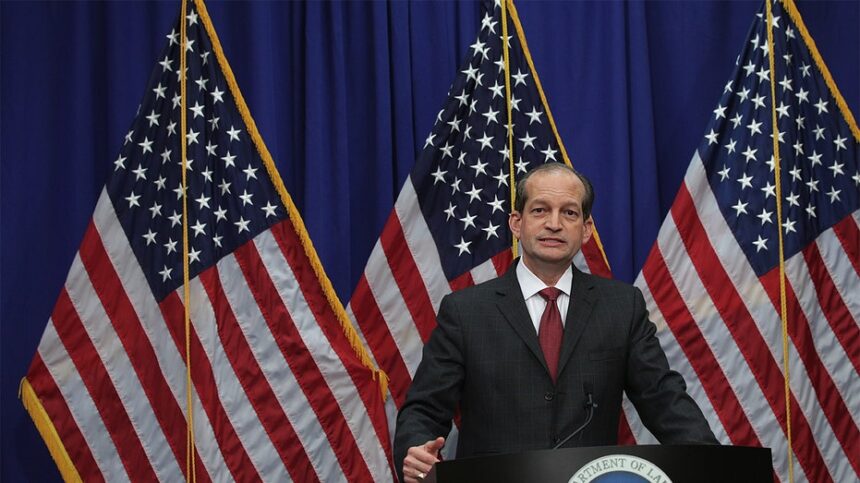
Documents published under the Epstein Transparency Act have detailed the lengths that Epstein went to in order to cultivate a coterie of powerful relationships, including in Florida and within the Justice Department â where Alex Acosta, the U.S. Attorney for the Southern District of Florida, would go on to negotiate and approve a highly unusual “sweetheart” deal on Epstein’s behalf.Â
The information highlights the extent to which powerful friendships and profound leadership failures overlapped and intersected for years, creating a web of inoculation that shielded Epstein and allowed him to seemingly operate above the law despite a growing list of victims’ reports whose details were as bone-chilling as they were similar.Â
Details of Acosta’s behavior, in particular, have shocked outside observers and lawmakers alike, who pressed the former DOJ official in detail during his testimony to House Oversight Committee lawmakers last year.
Though Acosta’s role is not new, the transcript of his testimony, new reports of relationships between Epstein’s defense lawyers and former prosecutors in the Southern District, and a “data gap” that wiped Acosta’s computer from the nearly 12-month period between May 2007 to April 2008 â the same time frame that Epstein’s lawyers were aggressively lobbying federal prosecutors to end the federal case â have sparked a litany of new questions.
The documents, reports, and alleged data gaps revived questions over how Alex Acosta, then the U.S. attorney for the Southern District of Florida, , and the infamous 2007 plea deal he negotiated granting Epstein and his co-conspirators federal immunity.
Most recently, the sweetheart deal has sparked renewed scrutiny from the as part of its Jeffrey Epstein probe. Democrats on the panel blasted Acosta’s testimony as defiant and defensive.
“The transcripts of Alex Acostas interview confirm what weve known all along: he has no remorse for his mishandling of the Epstein case,” Sara Guerrero, spokesperson for Oversight Democrats, said in a statement.Â
Acosta “continues to deny he gave Jeffrey Epstein a sweetheart deal, despite cutting the investigation short and granting Epstein a non-prosecution agreement, even though 30 victims had been identified at the time,” Guerrero said. Â “Because of the deal Alex Acosta gave Epstein, he was able to continue assaulting and raping young women and girls for another decade.”
To be sure, Acosta is far from the only prosecutor Epstein targeted in a charm offensive, as evidenced by new documents and a trove of recent reporting.
 Still, the Non-Prosecution Agreement (NPA) is the only such agreement granted by Acosta during his time in the Southern District of Florida â prompting questions and years of criticism.Â
It effectively neutered a years-long federal investigation into Epstein that began in 2005 and allegedly included 30 identified victims â helping Epstein avoid far more serious federal charges of sex trafficking. Federal prosecutors, who readied a 60-count federal indictment, were caught off guard by the decision. It also allowed Epstein to continue his abuse for roughly a decade before he was arrested and died in prison.Â
FBI Director Kash Patel recently pointed to Acosta’s handling of the case as the “original sin” in what has proved to be a broader set of department-wide failures in the Epstein case, and the Justice Department has since acknowledged it was “poor judgment” from Acosta’s office, and “undercut public confidence in the legitimacy of the resulting agreement.”Â
Criticism of the sweetheart deal is not new, and Ac