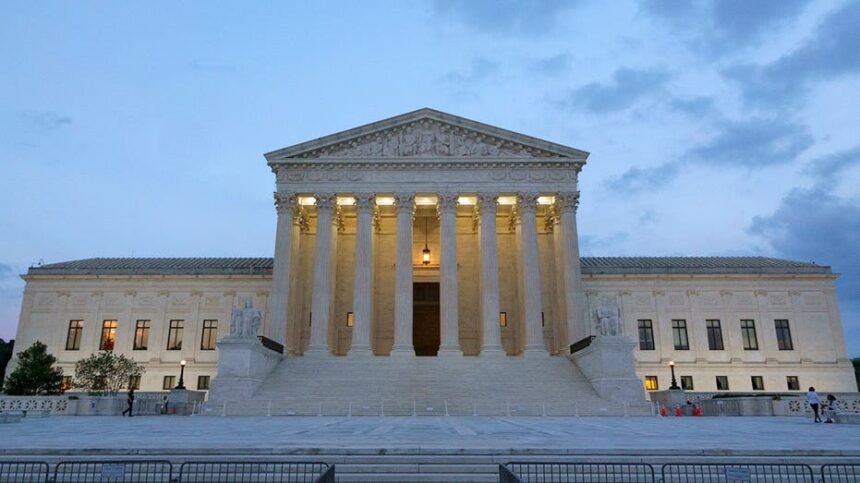
University of Pennsylvania professor Michael Mann is the vice provost for Climate Science, Policy, and Action and has pushed candidates to commit to major environmental reforms. Notably, he seemed to pivot in an interview with Peter Dominick on a podcast last week, calling for all Democratic candidates to face a litmus test on committing to pack the Supreme Court: promise to pack or get the sack.
It is only the latest example of how the hostile takeover of the court is now the priority for many Democrats in removing a barrier to a radical agenda.
“When it comes to Senate races, there should be a litmus test,” Mann said. “It isnt just good enough to be a Democrat. Youve got to be a Democrat who would be willing to expand the Supreme Court ⦠Theres no way not to be partisan. Theres no way not to be political here. If you care about the environment, youve got to vote for the Democrats now.”
Establishment candidates are offering the mob the Supreme Court to show their bona fides as the far left turns on “institutionalists” who support our constitutional system. As I previously wrote, even law professors and deans joined this movement in calling for the rejection of our Constitution on the 250th anniversary of our revolution.
Once packed, the court could greenlight a variety of unconstitutional measures.
Years ago, Harvard professor Michael Klarman laid out a radical agenda to change the system to guarantee Republicans “will never win another election.” However, he warned that the Supreme Court “could strike down everything I just described.” Therefore, the court must be packed in advance to make these changes possible.
That includes an agenda for extreme measures ranging from wealth taxes, to reparations, to climate control regulations.
MORNING GLORY: END THE FILIBUSTER, PACK THE COURT, KISS THE CONSTITUTION GOODBYE
Mann raised the need to reverse doctrines limiting agency authority â a barrier to some climate control measures. In so doing, he got the underlying law fundamentally wrong: “It was in a conservative Supreme Court decision within the last few years that introduced the so-called Chevron standard. Basically, what they said was that the EPA no longer had the authority to make rules based on the science and its own determination.”
In 2024, the Supreme Court actually overturned the Chevron Doctrine in Loper Bright Enterprises v. Raimondo. It also did not rule that “the EPA no longer had the authority to make rules based on the science and its own determination.” Rather, it said that courts would review such decisions without the prior presumptions in favor of agency decision-making. The restored, traditional judicial review is precisely to determine whether agency decisions ar