The 2026 college football season is officially underway, and with it returns one of the greatest sporting traditions: criticizing crowd sizes and attendance.
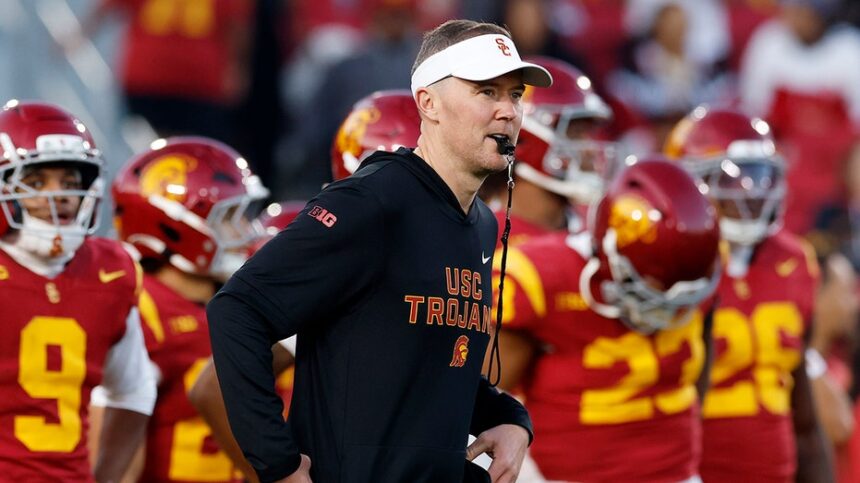
This season, the culprit was USC, as the Trojans opened their 2026 season at home against San Jose State. Because college football scheduling is no longer based on what makes sense given a location, local time zones, time of year, or weather, NBC picked the 12pm Pacific Time window for kickoff.
That’s always a tough time for Southern California locals, because Saturday traffic in the Los Angeles area, particularly for events around downtown LA, makes getting in and out of venues an hours-long slog. Combine it with the $60 parking a mile away, a poor quality opponent, and one of the most brutal weather days of the year, with atrocious heat and humidity, and it’s a recipe for reduced attendance.
That’s exactly what happened. And the college football world rushed to do what it does best, roast other programs. The crowd at kickoff was extremely small, though, it did fill in a bit more by late in the first quarter. Unsurprisingly, with the game already decided in the first 15-18 minutes and the awful conditions, it quickly emptied out.
Many commentators rushed to say that the low turnout is why USC will not make the College Football Playoff this year, while adding that Lincoln Riley is officially on the hot seat. And to be fair to those uninformed opinions, there’s little doubt that USC’s underwhelming performances in recent years contributed to the poor showing. But one thing those commentators, and most fans, completely misunderstand, is that attendance and fan support has quite literally nothing to do with team quality.
This phenomenon though, continues to have widespread support across college football. Fans show up to watch Arkansas on seven days a year, therefore Arkansas must be a good program with good players. Does it matter if the Razorbacks finish 2-10? Does that make them a bad program? Apparently not, because their fans showed up to watch them lose.
Then there’s the other, oft-ignored part of this discussion: fan attendance at big programs in hot weather in the heat has often been a problem. Here’s how one story covering the Florida Gators’ struggles to fill up their stadium for noon kickoffs described “The Swamp.”
“As I enter the stadium a few minutes before kickoff, the audio system rumbles through the cement pillars and Im ready for an overwhelming surge of energy. But when I make it out into the open air, the first thing I notice are empty metal bleachers reflecting rays of bright Florida sun. While the alumni section Im standing in is filled, the top third of the student section opposite me is mostly empty, a scatter-plot weighted toward the bottom. I was expecting the frenzied vibe of a rave; what Ive got is more of a buzzy mimosa brunch.”
And that was a highly attended game, according to Tyler Nettuno, a reporter for the school paper explained.
“The general admission seats above both end zones are patchy, too. ‘For a 12 oclock game,’ Nettuno continues, ‘this is the best Ive seen it.'”
The story goes on to point out that “Ohio State, Virginia Tech and Ole Miss suffered declines of greater than 5%” in attendance. As well as the fact that Clemson didn’t sell out a single game in a year they won a National Championship. While Ohio State fans explained they’d rather go sit at a bar with friends or at home instead of watching